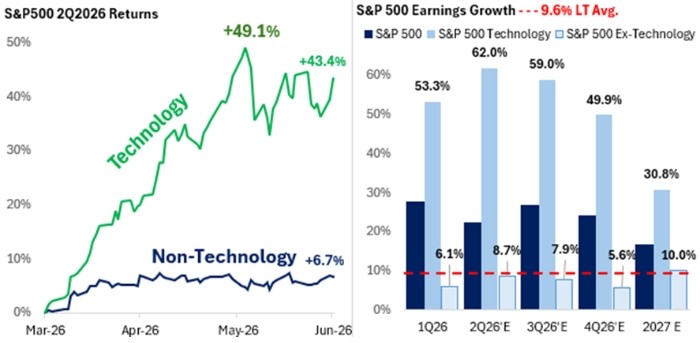
In the June quarter, markets rebounded from the Iran war shock and hit new highs, led by extraordinary earnings growth, especially from AI infrastructure stocks. The S&P 500 increased by 15.2% and the MSCI All Country World Index (ACWI) rose by 14.9%. Investors were relieved by the appearance that diplomacy would replace the military destruction of energy production and the disruption of supply for the global economy. Equity returns were narrow; the S&P technology sector rose 43.4% for the quarter, whereas the rest of the market was up 6.7%.
AI infrastructure buildout remains the key theme. In fact, 47% of market returns in the quarter were generated by a small “AI stock” basket representing only 14% of market capitalization. This basket does not include the “Magnificent 7” companies that dominated equity returns over the past few years. While AI stocks are driving very high earnings growth, other sectors are also recording steady growth. The consumer continues to spend, and the job market remains strong.
Chart 1: Returns Track Earnings as Technology Sector Outpaced Rest of Market
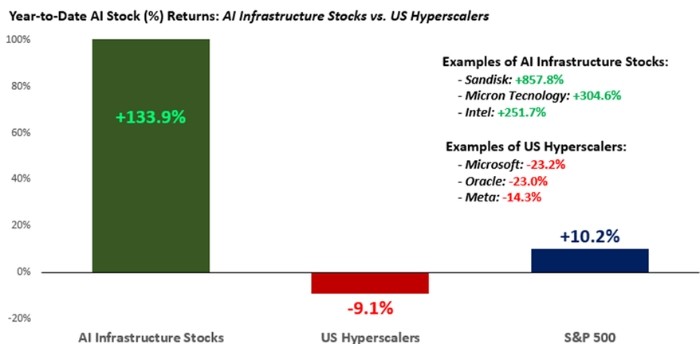
Year to date, we saw semiconductor companies (NVIDIA, Micron, Applied Materials, etc.) outperforming the ‘hyperscaler’ companies that are spending their massive cash flows to deploy equipment and provide AI features in the market (Amazon, Microsoft, Google, Meta, etc.). Interestingly, the biggest semiconductor gains did not come from industry leaders such as NVIDIA and Broadcom and instead came from niche companies. These niche companies benefit from the current sudden need for supply but they seem vulnerable to a future cyclical downturn.
Chart 2: Infrastructure Stocks Benefit from Hyperscalers’ Spending
Oil prices declined from May highs, but the Iran conflict remains unresolved and geopolitical headline risk remains as the Iran MOU seems tenuous. Petroleum stockpiles are mostly depleted, so it is essential for Hormuz shipping traffic to return to normal soon. On the other hand, Venezuela production is increasing and the departure of the UAE from OPEC will likely add more supply eventually.
Chart 3: Oil Prices Will Track Forecasts for the Volume of Ships Through Hormuz
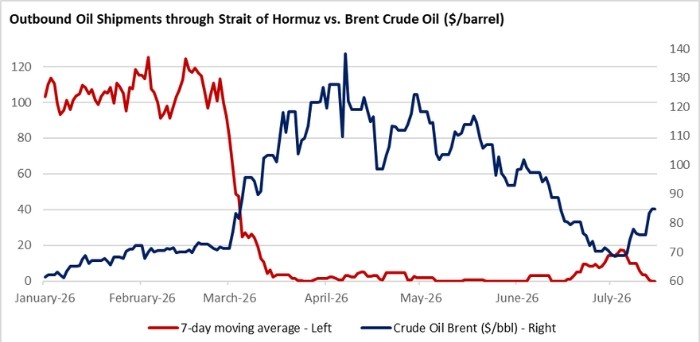
Inflation refuses to fade away. Annual Consumer Price Inflation rose 4.2% in May. When the current US-Iran conflict began in late February, oil prices rose from below $70 per barrel to peak near $120/barrel in early April (see chart above). Though oil prices trended down after April, Russia refinery outages are contributing to high gasoline and diesel prices. In addition, interest rates moved up with the first surge in oil prices but did not return to pre-conflict levels.
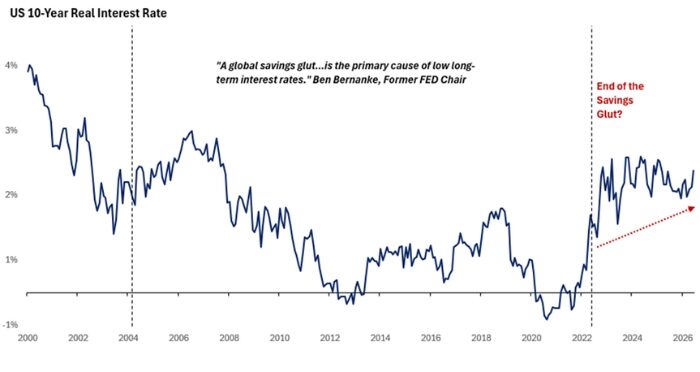
A steady labor market and resilient consumer spending is keeping core inflation (excluding energy) stubbornly higher than the Fed target. In addition, the AI boom requires tremendous corporate spending. As demand for capital increases and supply of capital diminishes, we may see a continuing rise in the real rate of interest (the rate that investors demand above inflation).
Chart 4: Real Interest Rates Remained Elevated Despite Easing Oil Prices
As we enter the second half of the year, we see continued earnings growth supporting high market prices, while uncertainty swirls around the Middle East and the upcoming midterm elections. AI excitement remains front and center, as SpaceX just launched the largest IPO ever (in part proclaiming plans for AI), and we expect Anthropic and OpenAI to launch IPOs soon. These companies will provide a valuable window for investors to estimate AI adoption and the profitability of AI computing and related services. SpaceX stock was heavily marketed to retail investors, and these 3 “mega-IPOs” may draw more investors into the market and fuel additional exuberance.
Looking toward 2027, we are assessing several questions; will the AI boom persist beyond the ‘Mega IPOs’? Will AI boost productivity? Will this lead to higher wages or will corporate profits capture the surplus? Will the massive consolidation of corporate and executive branch power shift the regulatory balance that has been mediating between democracy and the pursuit of profit in capitalism?
Capitalism seems to be suddenly unleashed from regulation. For several decades a set of longstanding ‘checks & balances’ have ensured a relatively stable regulatory environment, and companies and consumers have been able to rely on stability to make long-term investments. This year some of the largest corporations are benefiting from lower taxes, consolidation in key sectors, and a lack of labor bargaining power. The Supreme Court and Congress have enabled the President to 1) fire leaders of independent agencies, and 2) assert very broad discretion for applying current laws. As a result, regulations and laws could dramatically change with each new presidential administration. This adds uncertainty, stifles long-term planning, and increases the possibility for graft and favoritism. The politicization of the economy raises the stakes for the midterm elections later this fall, and we worry this increasing unpredictability raises risks for investors.
Chart 5: Labor Losing Share to Capital as S&P 500 Profit Margins Reach New Highs
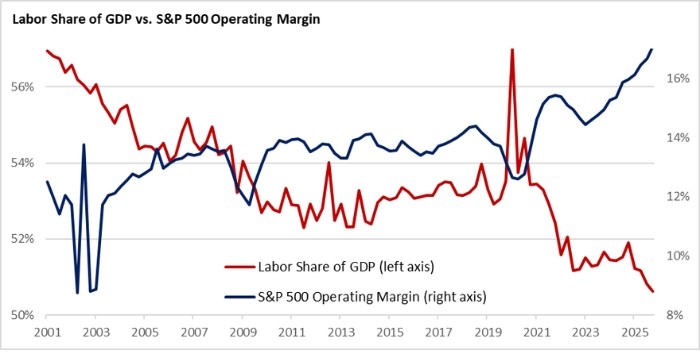
Consumer sentiment remains low as the share of GDP flowing to labor shrank over the last 25 years and the share going to capital is at an all-time high with company operating margins reaching record levels.
The economy usually rewards optimists in the long run. The US and the global economy has adapted to major technology shifts in the past and ultimately society has accrued the benefits. The road ahead may be bumpy but still positive for investors.
We look forward to hearing from you and providing updates on your portfolio and on our outlook for the rest of the year. Please reach out with any questions.
Best regards,
The Choate Wealth Investment Team