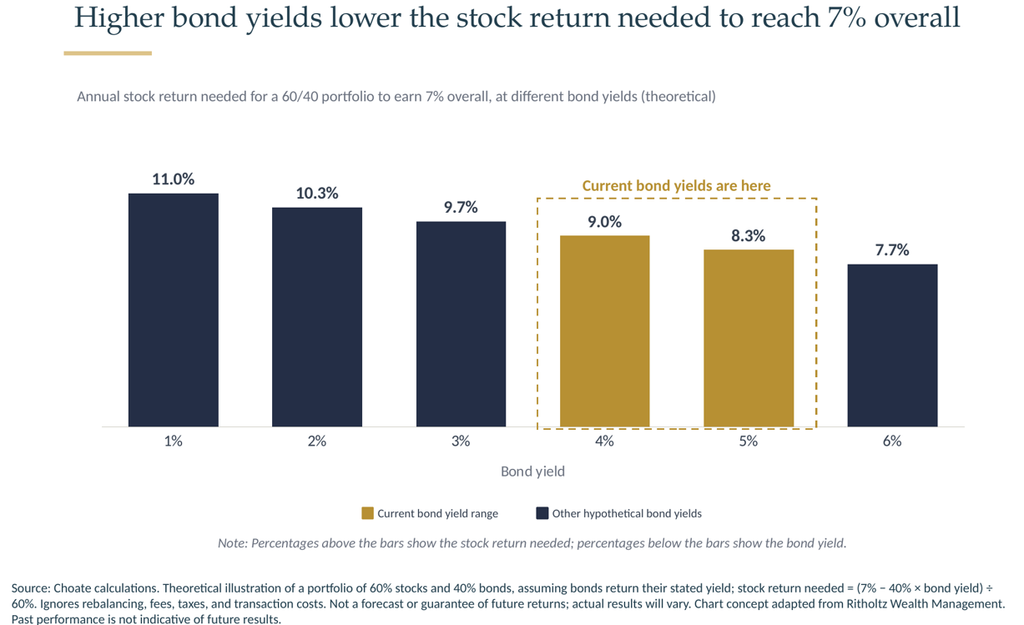
Higher bond yields are hurting housing affordability, but higher starting yields generally lead to higher future bond returns for investors, which may help offset lower equity returns in the years ahead. This week’s chart shows how higher bond yields might impact the returns on a 60% stock/40% bond portfolio. We use 7.0% annual return as a reference point, since it is close to the median 10-year return of a 60/40 portfolio (since 1997), and the return needed to keep pace with an annual withdrawal rate of 4% plus 3% inflation.
- Stocks have outperformed their long-term average while bonds have lagged behind. Over the last 10 years, the S&P 500 returned about 15% a year versus about 10% over the past 30 years, roughly 5 points above its long-term pace. The Bloomberg U.S. Aggregate returned about 1% a year over the last 10 years versus about 4% over 30 years, roughly 3 points below. Blended portfolios have relied on stocks to do the heavy lifting.
- Higher bond yields reduce the burden on stocks. In a 60/40 portfolio, each percentage point of bond yield cuts the stock return needed to reach 7% by about 0.7 points. At 4%–5% current yields, stocks need roughly 8.3%–9.0% annual return, versus the 11.0% annual return when bond yields were only 1%.
- Bonds returns will cushion impact of lower equity returns. Starting yields have historically been a reasonable guide to the long term return on bonds. With fixed income yields around 5% today, the expected longer term return for bonds should be around 5%. A diversified portfolio no longer needs equities to earn above average returns to meet a 7% portfolio return goal.
If you’d like to receive the Chart of the Week directly in your inbox, please sign up below.